

Workshop brings together government, industry, farmers and financial institutions to promote clean energy, scientific waste management and sustainable agriculture
Mumbai, October 23, 2026: Bharat Petroleum Corporation Limited (BPCL), a Maharatna public sector undertaking and Fortune Global 500 company, hosted a high-level workshop titled “Waste to Wealth – Scaling GOBARdhan” in Mumbai, in collaboration with the Ministry of Petroleum and Natural Gas (MoPNG) and the Government of Maharashtra. The initiative aimed to strengthen the policy framework, institutional coordination and implementation mechanisms required to accelerate Compressed Bio-Gas (CBG) projects across Maharashtra.
The workshop brought together senior government officials, industry representatives, City Gas Distribution companies, Urban Local Bodies, CBG developers, financial institutions, technology partners and Farmer Producer Organisations to explore opportunities for developing a robust CBG ecosystem in the state.
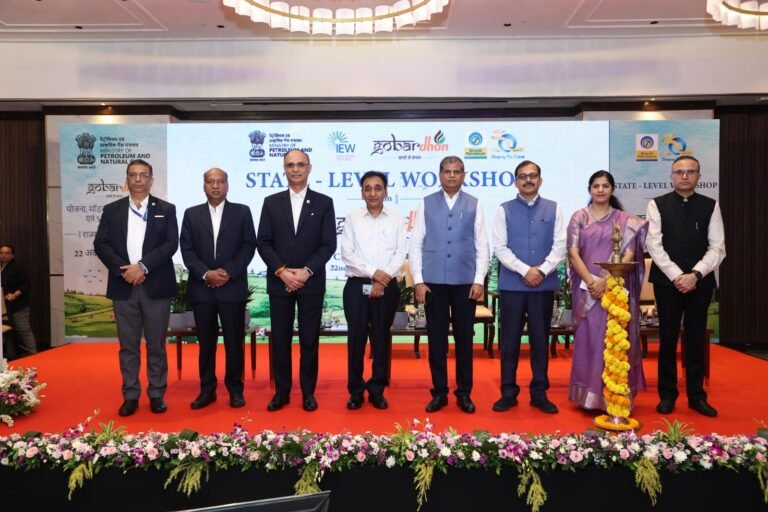
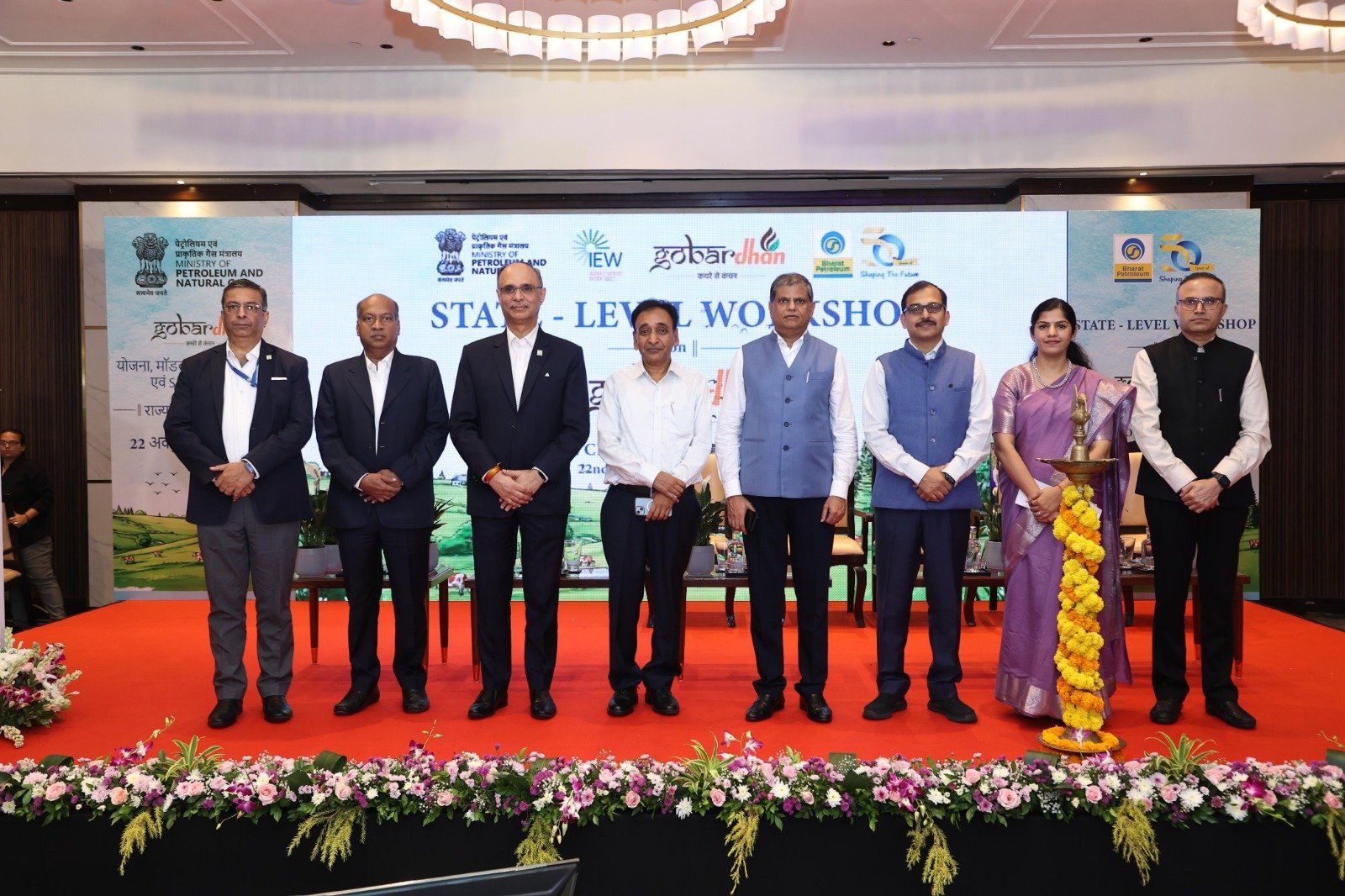
The inaugural session was attended by Maharashtra Chief Secretary Rajesh Aggarwal; Additional Chief Secretary of the Urban Development Department-2, Dr K.H. Govind Raj; MoPNG Director (GP) Vikas Singh; MoPNG Deputy Secretary (International Cooperation) Yashika Mehta; BPCL Chairman and Managing Director Sanjay Khanna; BPCL Director (Marketing) Subhankar Sen; and BPCL Director (Finance) V.R.K. Gupta.
Turning Waste into Clean Energy and Economic Opportunities
Addressing the gathering, BPCL Chief General Manager (Biofuels) Inderjit Singh highlighted Maharashtra’s significant potential for producing Compressed Bio-Gas using municipal solid waste, agricultural residues and press mud. Emphasising the philosophy of the GOBARdhan initiative, “Kachre Se Kanchan” (turning waste into wealth), he called for a shift in the perception of waste from a disposal challenge to a valuable resource for clean energy generation, agricultural development and local economic growth.
BPCL Chairman and Managing Director Sanjay Khanna highlighted the transformative potential of CBG in supporting India’s clean energy transition.
He said CBG offers an integrated opportunity to convert agricultural residues, cattle dung, press mud and organic municipal waste into renewable energy while promoting scientific waste management, strengthening the circular economy and generating rural livelihoods.
Khanna also emphasised the importance of organic manure produced by CBG plants in improving soil fertility and supporting sustainable agriculture. He underlined the need to translate policy initiatives into practical projects through stronger partnerships and coordinated implementation.
“Farm to Fuel. Fuel to Fertility. Fertility back to Farm” was highlighted as a key principle of the waste-to-wealth approach, linking renewable energy production with agricultural sustainability and community development.
Centre Calls for Stronger State-Level Support
MoPNG Director (GP) Vikas Singh highlighted the Government of India’s vision for scaling up the GOBARdhan initiative and discussed the policy and market frameworks needed to accelerate CBG projects.
He stressed the importance of coordinated action among the Central and State Governments, industry stakeholders, Urban Local Bodies, farmers and financial institutions.
Singh also urged the Government of Maharashtra to align its state policy with the national framework, establish a dedicated land bank and undertake detailed feedstock assessments to support the development of CBG projects across the state.
Maharashtra Chief Secretary Rajesh Aggarwal highlighted the relationship between energy consumption and economic development, noting the substantial potential of agricultural waste as a resource for clean energy production.
He emphasised the need to ensure the efficient utilisation of municipal solid waste and agricultural residues to promote scientific waste management, create greater value for communities and strengthen Maharashtra’s clean energy ecosystem.
Focus on Organic Manure and Sustainable Agriculture
MoPNG Deputy Secretary (International Cooperation) Yashika Mehta highlighted the importance of CBG in India’s energy mix and shared the theme of India Energy Week 2027, scheduled to be held in Kolkata.
A focused session conducted by MoPNG and BPCL’s Corporate Research and Development Centre (CRDC) team examined the potential of Enriched Fermented Organic Manure (EFOM). The discussion highlighted how organic manure generated through the CBG ecosystem can contribute to improved soil health and sustainable agricultural practices.
The workshop also featured presentations and discussions on the GOBARdhan Scheme, the Model State CBG Policy and SASCI 2026–27. Representatives from the Centre for High Technology (CHT) and the Urban Development Department of the Government of Maharashtra discussed policy provisions and implementation requirements for expanding the state’s CBG sector.
Addressing Challenges to Scale Up CBG Projects
The workshop identified several key areas requiring coordinated action to accelerate CBG project development in Maharashtra. These included reliable feedstock availability, assured offtake, stable pricing mechanisms, streamlined approvals, access to financing and the development of supporting infrastructure.
Maharashtra’s agricultural sector, municipal waste streams, cattle dung and press mud offer opportunities to establish a stronger CBG production network while addressing waste-management challenges and creating additional economic value.
BPCL reiterated its commitment to the sector as a producer, offtaker and facilitator, with a focus on converting organic waste into clean energy and useful agricultural resources.
The deliberations concluded with an emphasis on collaboration among government bodies, farmers, cooperatives, industry participants and financial institutions to accelerate project implementation and establish a sustainable waste-to-wealth ecosystem in Maharashtra.
The initiative reflects the growing importance of compressed biogas in India’s efforts to diversify its energy mix, improve waste management, support sustainable agriculture and advance the transition towards a cleaner energy future.
About Bharat Petroleum Corporation Limited (BPCL)
Bharat Petroleum Corporation Limited is a Maharatna public sector undertaking and a Fortune Global 500 company. It is one of India’s leading integrated energy companies, engaged in crude oil refining and petroleum product marketing, with operations across the upstream and downstream segments of the oil and gas industry.
BPCL operates refineries in Mumbai, Kochi and Bina, with a combined refining capacity of approximately 35.3 million metric tonnes per annum (MMTPA). Its extensive marketing and distribution network includes fuel stations, CNG stations, LPG distributorships, aviation service stations, storage facilities and pipelines.
As part of its sustainability strategy, BPCL is expanding its focus on cleaner energy solutions, including electric vehicle charging infrastructure and renewable energy initiatives. The company aims to become a Net Zero Energy Company for Scope 1 and Scope 2 emissions by 2040.
With “Energising Lives” as its core purpose, BPCL continues to pursue initiatives in energy innovation, environmental sustainability, community development and technological advancement.