


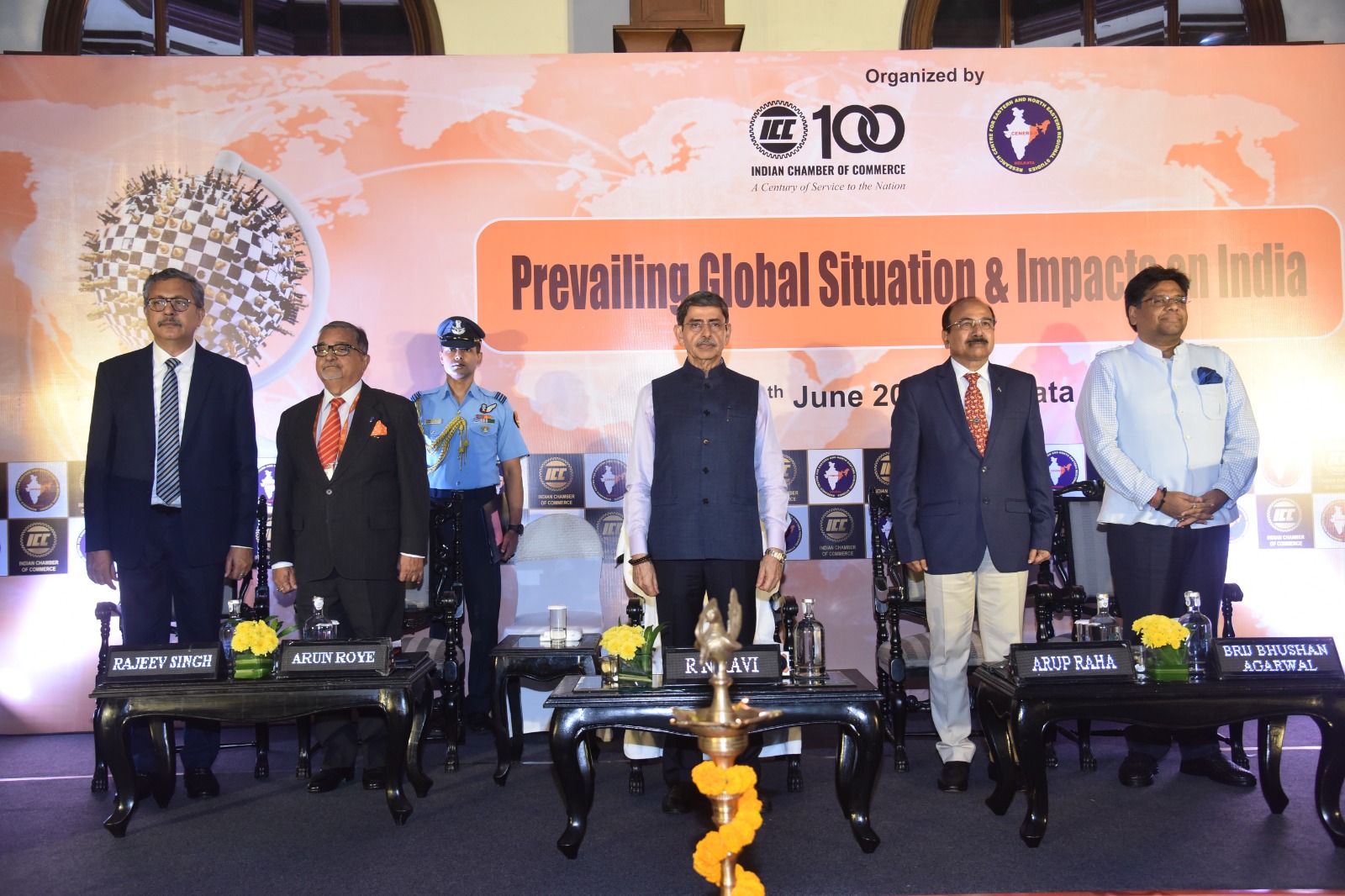
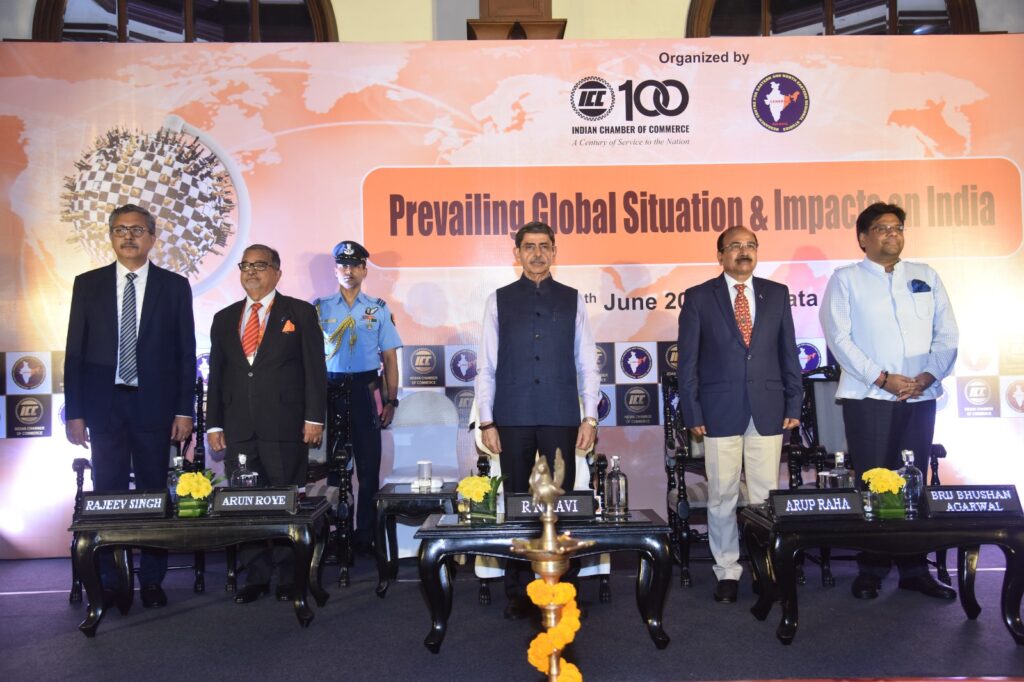
Kolkata, June 6, 2026: The Indian Chamber of Commerce (ICC) convened a landmark session on “Prevailing Global Situation & Impacts on India”, bringing together top policymakers, military leaders, economists and strategic experts to deliberate on the security, economic and geopolitical challenges shaping India’s future.
The event was graced by R. N. Ravi, Governor of West Bengal, as Chief Guest, alongside former chiefs of the armed forces, renowned strategic thinkers and leading economists.
India Must Turn Global Challenges Into Opportunities: ICC President
Welcoming the gathering, Brij Bhushan Agarwal, President of ICC, emphasized that the world is undergoing unprecedented transformations driven by geopolitics, technology and artificial intelligence.
“India is not merely adapting to global changes but actively shaping the future. Our unity, resilience and shared vision will help transform challenges into opportunities and build a stronger nation for future generations,” he said.
India an Oasis Amid Global Instability: Air Chief Marshal Arup Raha
Former Air Chief Arup Raha highlighted the importance of understanding global upheavals and their implications for India.
“India remains an oasis in a world marked by political, economic and military instability. We must identify vulnerabilities, analyze emerging threats and strengthen our capacity to withstand global disruptions,” he noted.
Governor R. N. Ravi: Bharat Must Shape the New World Order
Delivering the keynote address, Governor R. N. Ravi underscored India’s civilizational strength and its growing influence on the global stage.
“Bharat has existed as one civilization for thousands of years despite its diversity. The opportunity before us is not merely to adapt to a changing world but to help shape a new world order rooted in our values of Vasudhaiva Kutumbakam. As Bharat rises, it rises with the world, not at the expense of others,” he said.
He stressed that India’s journey toward becoming a developed nation by 2047 must be driven by national confidence, cultural consciousness and global leadership.
India’s Strategic Autonomy Remains Central: Gen. M.M. Naravane
Speaking during the session on security implications, former Army Chief M. M. Naravane reiterated India’s long-standing commitment to strategic autonomy.
“India takes principled decisions based solely on national interests, whether in forums like QUAD or BRICS. Strategic autonomy remains at the core of our foreign policy approach,” he stated.
Call for Greater Agility in Diplomacy
Strategic affairs expert Bharat Karnad urged policymakers to respond more swiftly to emerging geopolitical opportunities.
He emphasized the need for diversified energy and trade corridors, warning against overdependence on any single route and advocating a more assertive pursuit of India’s national interests.
Developed India 2047 Requires Collective Effort
Concluding the event, Rajeev Singh highlighted how India has successfully converted multiple global crises into opportunities through proactive policymaking.
“The goal is a developed India by 2047. Every stakeholder has a role to play in this journey. Bengal too must aspire to reclaim its position as the country’s leading state, and ICC stands ready to partner in that transformation,” he said.
Key Takeaway
The ICC session underscored a broad consensus among policymakers, military strategists and economists that while geopolitical turbulence and economic uncertainty present significant challenges, they also offer India a historic opportunity to strengthen its global standing, safeguard national interests and accelerate its journey toward becoming a developed nation by 2047.