


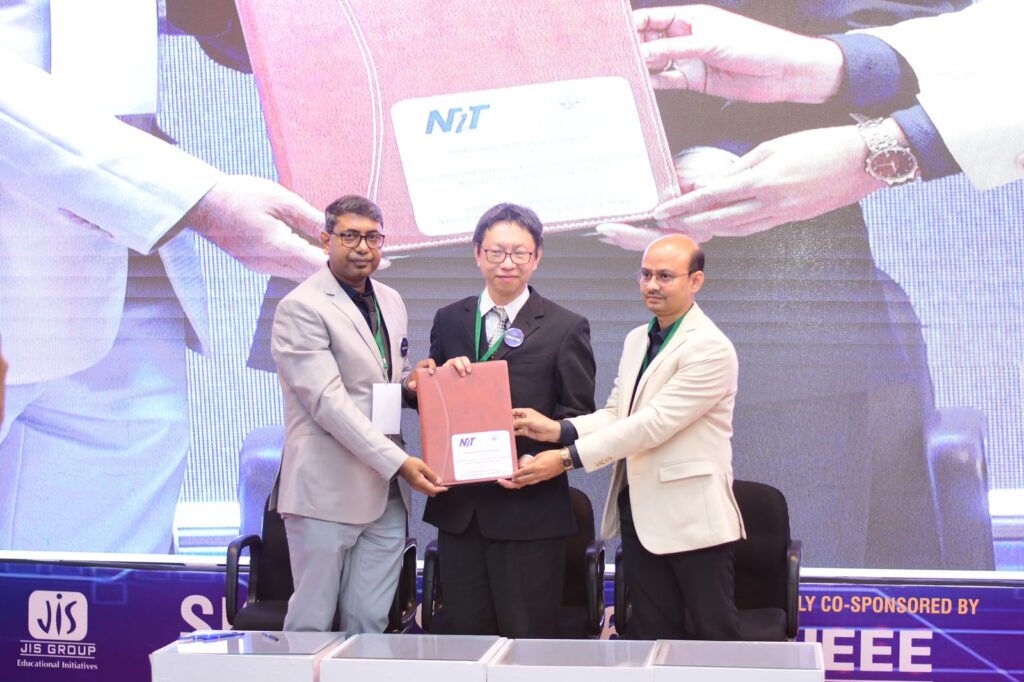
Partnership focuses on biomedical image & signal processing, academic exchange, and smart healthcare innovation
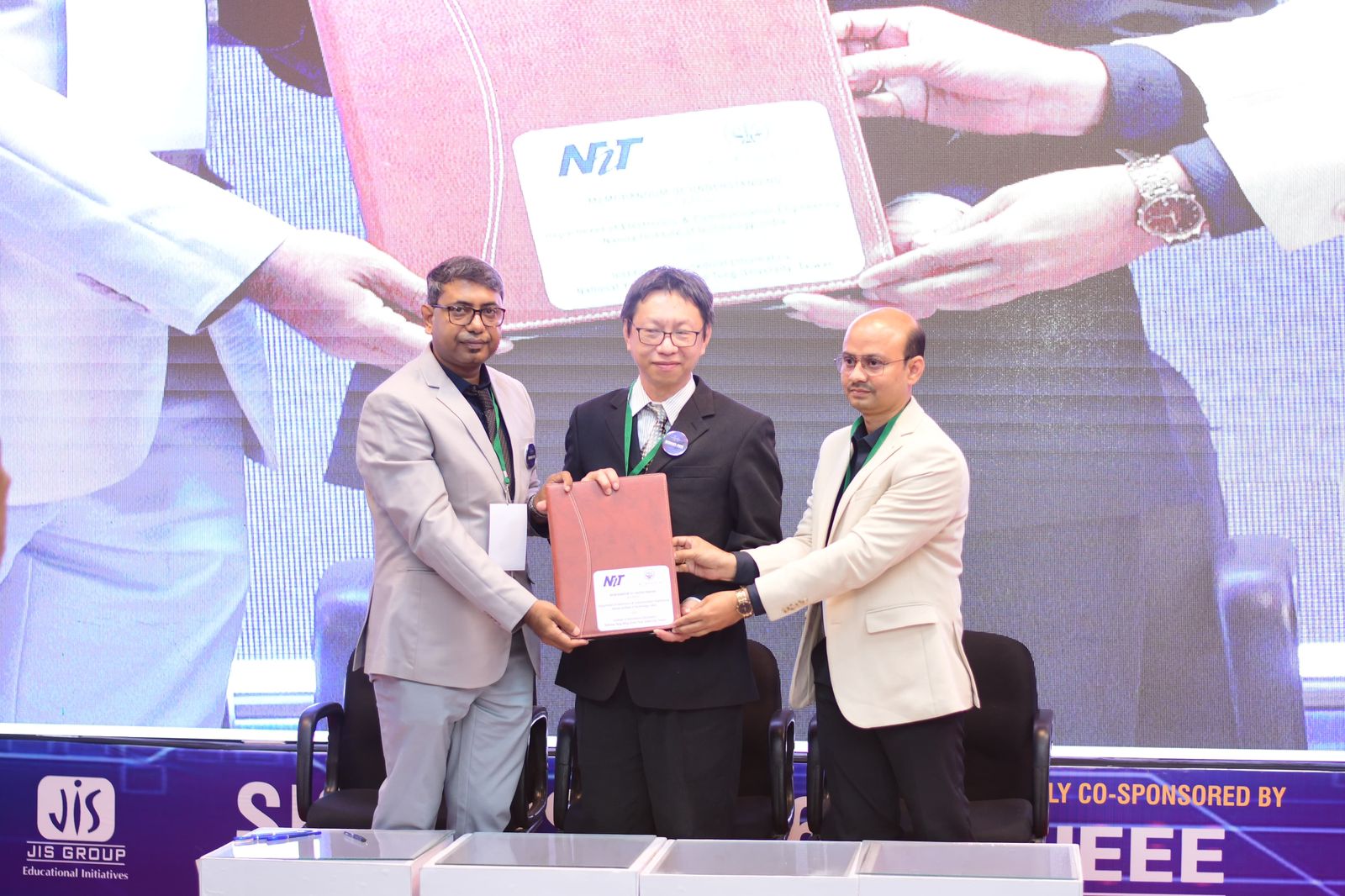
Kolkata, 16 February 2026: Narula Institute of Technology (NiT), a JIS Group educational initiative, has formalised an international academic partnership by signing a Memorandum of Understanding (MoU) with the Institute of Biomedical Informatics at National Yang Ming Chiao Tung University (NYCU), Taiwan.
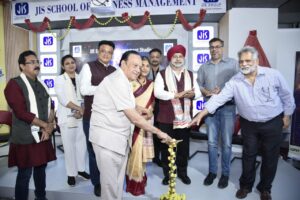
The MoU was signed during the inaugural ceremony of SIGNASS 2026 – the International Conference on Signals and Smart Systems, marking a significant step toward global collaboration in advanced biomedical technologies.
Focus on Research & Academic Exchange
The collaboration aims to advance cutting-edge research in Biomedical Image and Signal Processing, with both institutions committing to joint research initiatives and knowledge sharing. The agreement will facilitate:
- Faculty and student exchange programmes
- Joint academic and research projects
- Seminars and international workshops
- Short-term specialised courses in smart systems and healthcare technologies
Academic leaders noted that the partnership will encourage interdisciplinary innovation at the intersection of biomedical engineering, artificial intelligence, and intelligent signal systems.
Strengthening Global Academic Pathways
The MoU is expected to enhance global exposure for students and researchers while reinforcing institutional capabilities in emerging healthcare technologies and smart diagnostics.
Speaking on the occasion, Sardar Simarpreet Singh, Director of JIS Group, said the collaboration reflects the group’s commitment to expanding international research networks and fostering academic excellence. He emphasised that working with a premier global institution like NYCU will enable meaningful contributions to the future of healthcare innovation and intelligent technology systems.
The agreement positions Narula Institute of Technology to play a stronger role in global biomedical research while opening new avenues for students and faculty in advanced scientific exploration.