


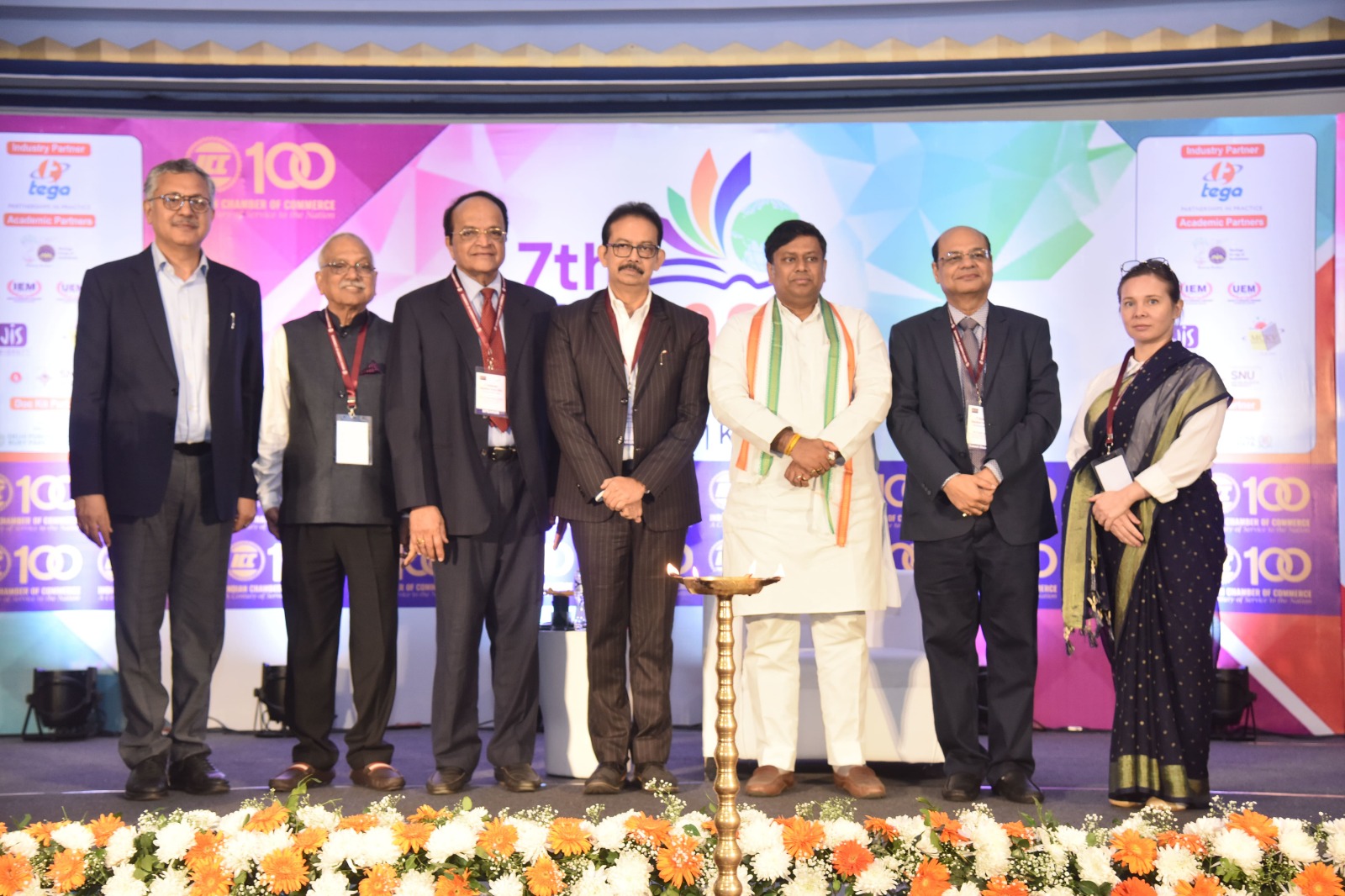
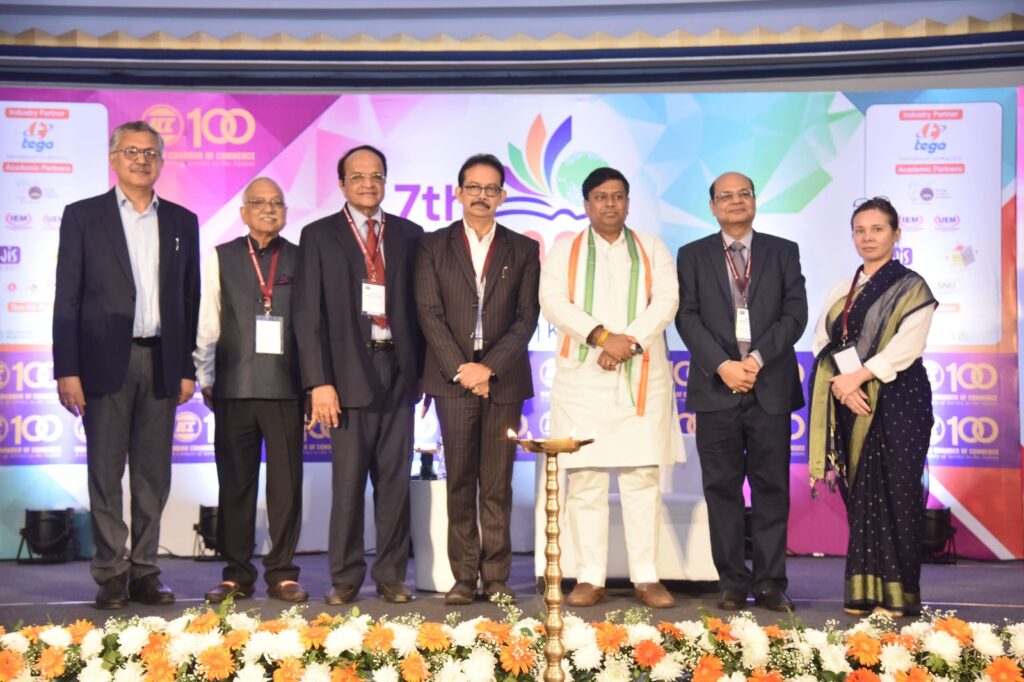
Kolkata, February 27: The Indian Chamber of Commerce (ICC) on Thursday hosted the 7th Global Education Forum (GEF), bringing together policymakers, academicians, industry leaders and international representatives to deliberate on reforms needed to align India’s higher education system with the vision of Viksit Bharat @2047.
The conference, organised by ICC’s National Expert Committee on Higher Education & Training, was themed “Re-imagining Higher Education for Viksit Bharat @2047: Transforming Governance, Curriculum & Talent for a Global Knowledge Era.” Discussions centred on governance reforms, curriculum redesign, digital transformation, research innovation and stronger industry-academia partnerships.
Addressing the forum, Union Minister of State for Education & Development of North Eastern Region, Sukanta Majumdar, said that meaningful transformation in higher education must begin with the National Education Policy 2020 (NEP 2020). He described it as the most comprehensive overhaul of the education system in over three decades, highlighting its emphasis on multidisciplinary learning, flexibility through multiple entry and exit options, and the Academic Bank of Credits.
Referring to the proposed Viksit Bharat Shiksha Adhishtan Bill, 2025, he said it would usher in a new governance framework based on transparency, accountability and institutional autonomy. He stressed that reforms must extend beyond policy to classroom-level transformation, with updated curricula and stronger digital and research ecosystems.
In his keynote address, Sanjeev Sanyal, Member of the Economic Advisory Council to the Prime Minister, observed that artificial intelligence is rapidly reshaping the traditional university model. He said AI-enabled platforms allow students to access world-class lectures and receive real-time feedback, reducing dependence on conventional residential formats. Calling it a major opportunity for India, he urged institutions to focus on scalable, multilingual and technology-driven learning systems.
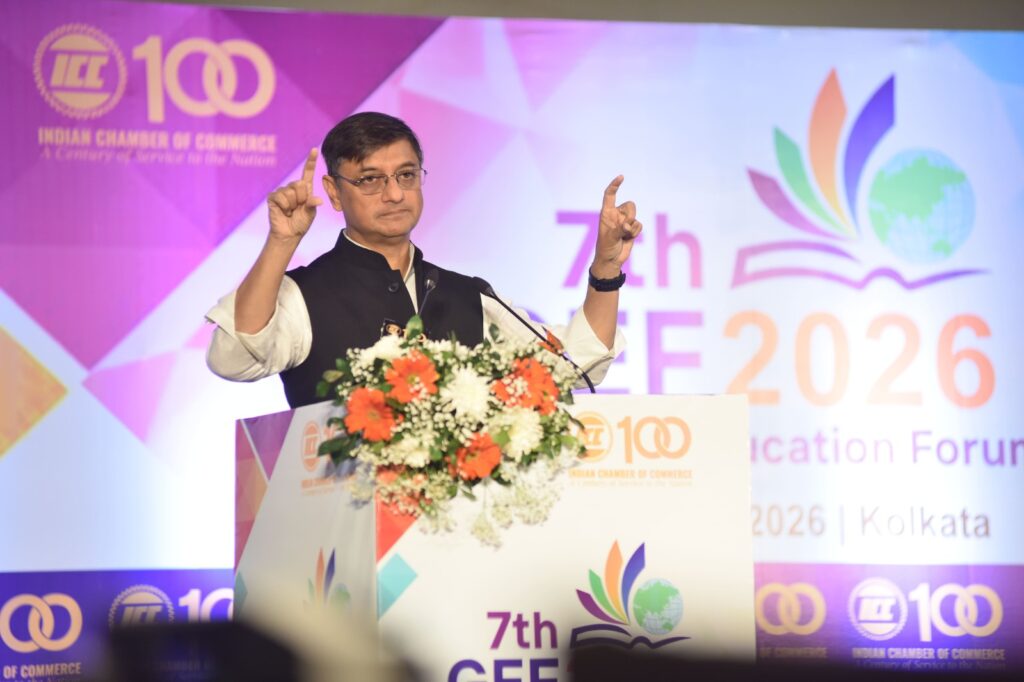
Welcoming delegates, Satyam Roychowdhury, Chairman of ICC’s National Expert Committee and Chancellor of Sister Nivedita University, highlighted India’s growing global academic footprint, including its record representation in the QS World University Rankings 2026. He emphasised inclusive growth, improved employability and integration of emerging technologies such as generative AI into mainstream education.
Pradip Agarwal, Member of ICC National EC and CEO of Heritage Group of Institutions, noted that while India’s Gross Enrolment Ratio has crossed 30 per cent, quality and employability remain critical concerns. Industrialist Madan Mohan Mohanka, Chairman of Tega Industries, stressed the need to create job creators rather than job seekers to achieve the 2047 vision.
In his concluding remarks, Rajeev Singh, Director General of ICC, said the deliberations had generated valuable insights and emphasised that implementation of reforms would be key to transforming India into a global knowledge powerhouse.
The forum reaffirmed ICC’s commitment to fostering collaboration and driving actionable reforms to build a competitive, inclusive and innovation-led higher education ecosystem for Viksit Bharat @2047.