




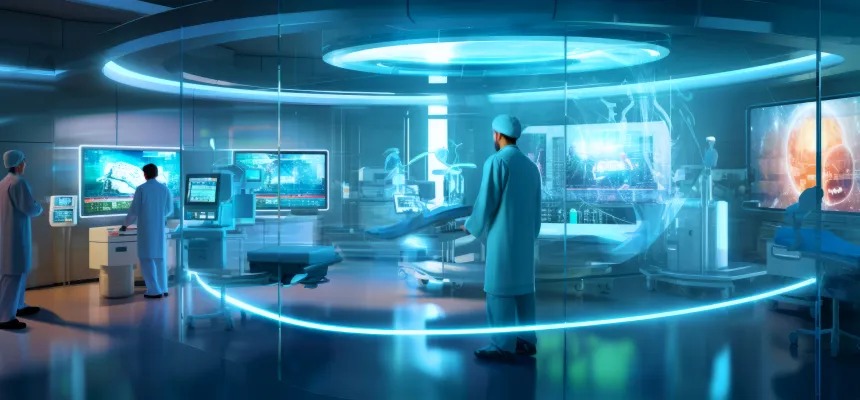
India, April 7: In a significant shift shaping the future of healthcare, hospitals across India are rapidly transformin
g into “smart hospitals,” where advanced technology is enhancing patient safety, improving recovery rates, and redefining the overall care experience.
Moving beyond traditional systems, these hospitals are adopting digital tools that support doctors in making faster, more accurate decisions while minimising risks. Experts say this evolution is crucial in a country where rising patient loads demand efficiency without compromising quality.
Digital Systems Cutting Down Medical Errors
Medical errors—particularly those related to medication—have long been a concern in healthcare. Smart hospitals are now tackling this challenge through technology-driven safeguards.
From electronic prescriptions to barcode-based medication verification and automated dispensing systems, every step of the treatment process is being digitally monitored. These layers of verification significantly reduce the chances of human error.
Dr. Upasana Palo, Consultant Gynaecologic Oncologist at Narayana RN Tagore Hospital, said that such systems have strengthened patient safety. She noted that while medication errors cannot be entirely eliminated, technology has created reliable checkpoints that make care safer and more consistent.
Technology Accelerating Recovery
Experts highlight that digital innovation is also playing a crucial role in improving recovery outcomes. Artificial intelligence and machine learning are enabling quicker diagnosis by analysing complex medical data in real time.
Telemedicine, another key advancement, is ensuring patients receive timely consultations without the need for travel. This has improved access to specialists and continuity of care—both critical for faster recovery.
Dr. Palo emphasised that early diagnosis and better treatment planning are directly contributing to smoother and quicker patient recovery journeys.
Precision Treatment Through Robotics
One of the most visible advancements in smart hospitals is the rise of robotic-assisted surgeries. These minimally invasive procedures offer greater precision, resulting in smaller incisions, reduced pain, and lower risk of infection.
Patients are also benefiting from shorter hospital stays and quicker return to daily life, marking a major improvement over conventional surgical methods.
Empowering Doctors, Improving Efficiency
Technology is not only benefiting patients but also transforming how healthcare professionals work. By automating routine administrative tasks and providing real-time clinical insights, digital systems are allowing doctors to focus more on patient care.
Integrated platforms enable continuous monitoring and instant alerts, ensuring timely interventions and better coordination among medical teams.
Seamless Operations and Better Patient Experience
From an administrative perspective, smart hospitals are creating a more connected ecosystem. Digital platforms now provide real-time access to patient data, improving decision-making and reducing delays.
Mr. Subhasis Bhattacharya, Facility Director at Narayana Hospital, (Barasat).said that hospital apps and digital systems are simplifying appointment scheduling, cutting waiting times, and minimising manual errors—leading to a smoother patient experience.
Smart Healthcare Already in Action
At Narayana Health facilities in Howrah and Chunavati, advanced technologies such as robotic surgery, neuro-navigation, and electronic medical records are already delivering positive outcomes.
Mr. Tapani Ghosh, Facility Director, stated that these innovations have resulted in fewer complications and improved efficiency. He added that the shift towards a paperless system has enhanced accuracy and made healthcare more accessible and seamless.
A Technology-Driven Future
While challenges like cost and large-scale implementation remain, the advantages of smart hospitals are becoming increasingly evident. Reduced errors, faster recovery, and improved patient outcomes are setting new benchmarks in healthcare delivery.
Experts believe that the future of healthcare lies in this balanced integration of human expertise and technology—where innovation supports doctors and ensures safer, more efficient care for every patient.
As India continues its journey towards digital transformation, smart hospitals are emerging as a cornerstone of a more advanced, reliable, and patient-centric healthcare system.